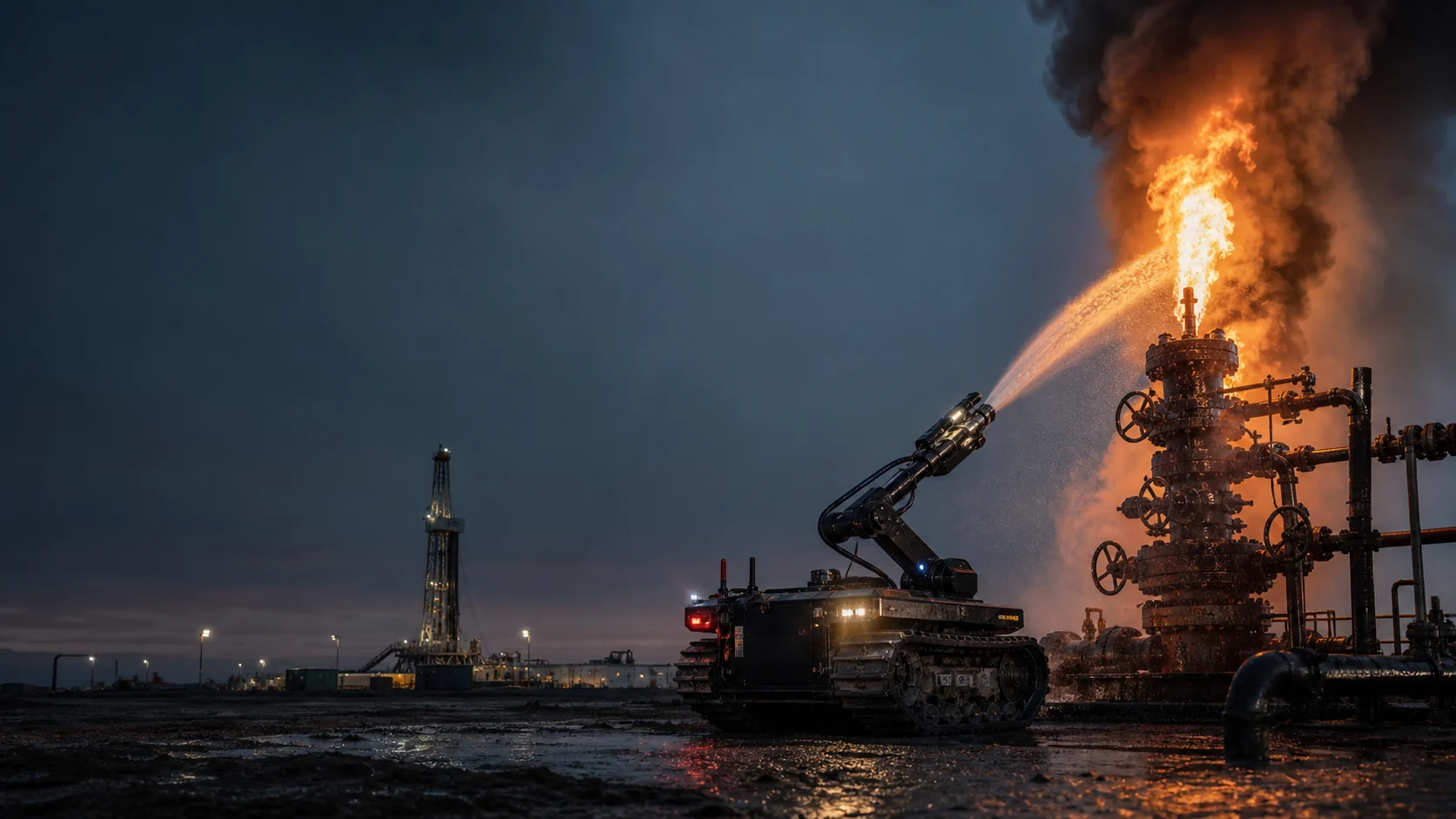
Open flame and heat
Remote platforms can operate closer to fire sources where direct personnel access is limited or unsafe.
Industrial robotic systems for emergency response
We supply and configure remotely operated robotic systems for industrial firefighting, blowout response, wellhead intervention and hazardous-area inspection.
Risk context
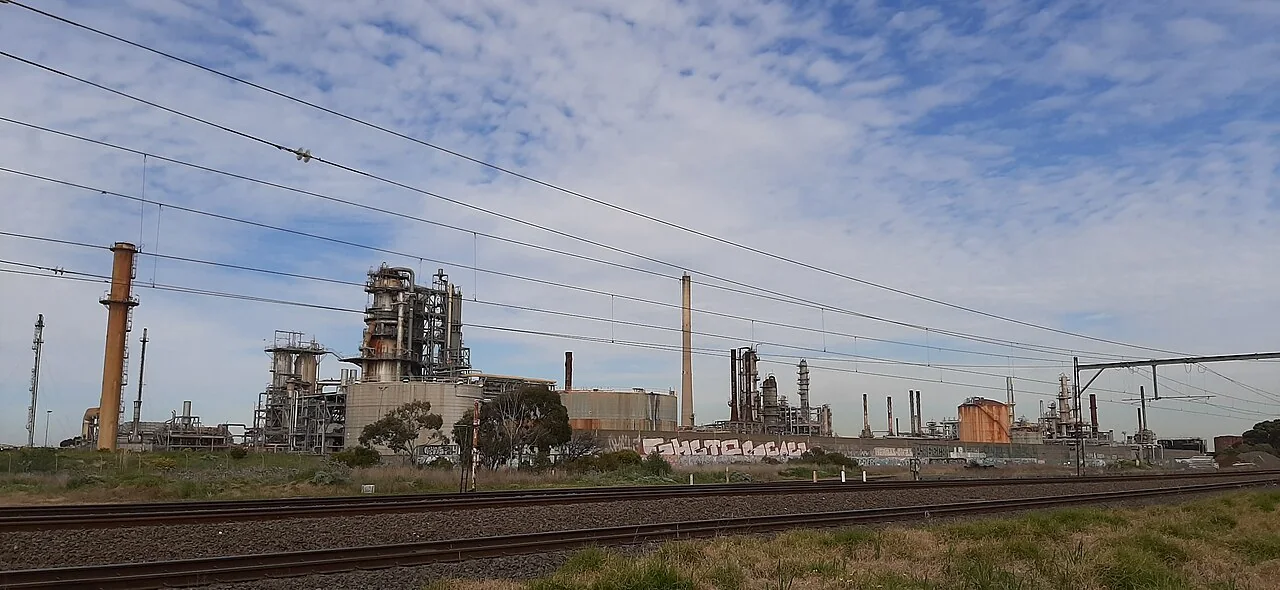
Oil & gas emergencies can expose response teams to open flame, toxic gases, unstable structures and explosive atmospheres. Robotic systems help operators approach the hazard zone while keeping personnel at a safer distance.
Remote platforms can operate closer to fire sources where direct personnel access is limited or unsafe.
Inspection and gas-monitoring robots support assessment before crews enter the zone.
Specialized platforms can assist with alignment, positioning and shut-off operations during blowout response.
Tracked platforms support movement across rough surfaces, debris, wet ground and restricted access areas.
What we provide
We help industrial operators select robotic systems for specific risk scenarios, configure equipment for site conditions and prepare teams for safe remote operation.
We match the robotic platform, tools and control package to the facility, task and operating environment.
Water/foam delivery, cameras, thermal imaging, gas detection, attachments and communication systems are configured around the mission.
Equipment can be delivered with acceptance checks, operator briefing and basic deployment documentation.
The goal is not only to buy a machine, but to make it usable in a real emergency-response workflow.
Core solutions
The equipment can be grouped by operational scenario: fire suppression, wellhead intervention, reconnaissance and heavy remote work.
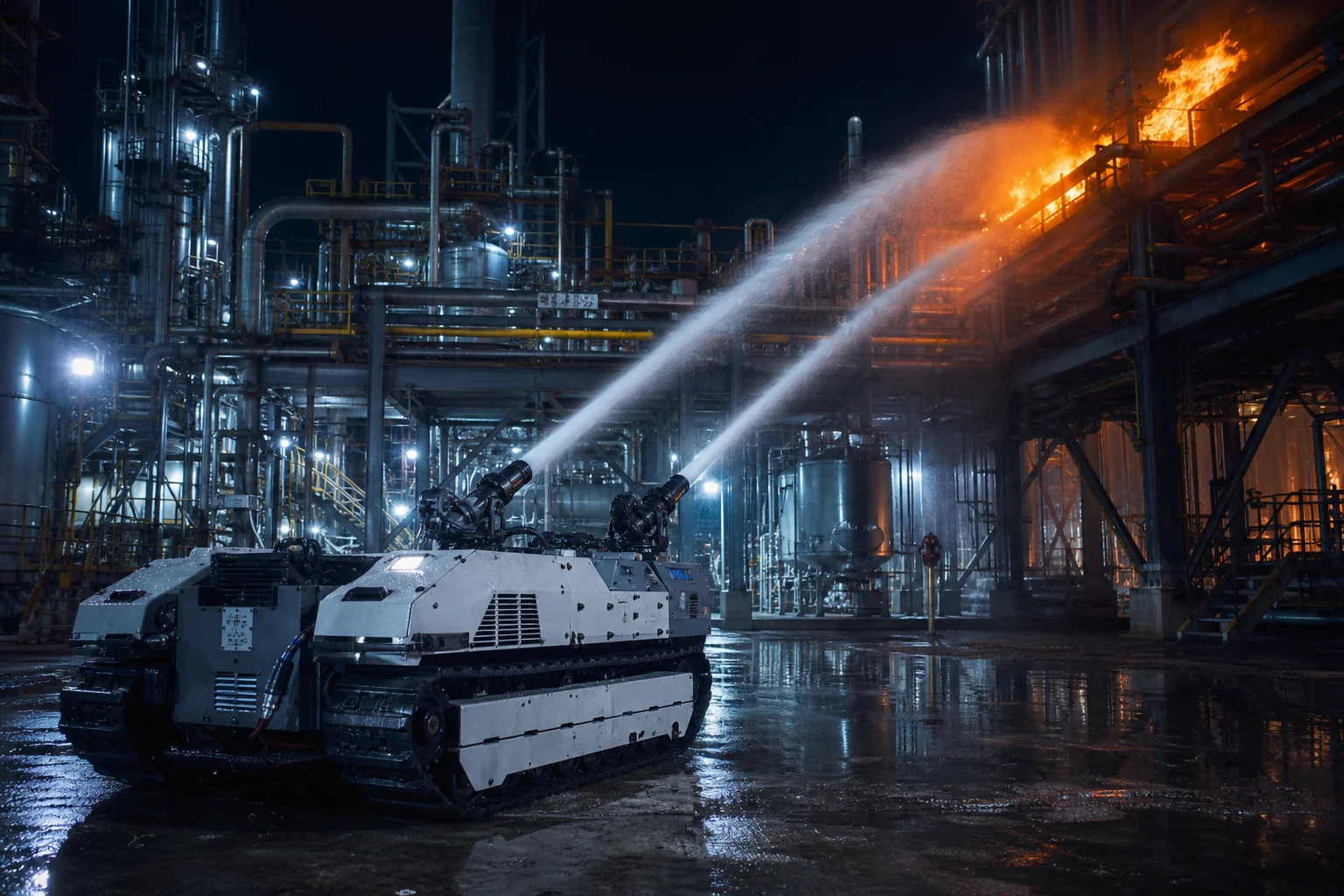
High-volume suppression support from a safer distance.
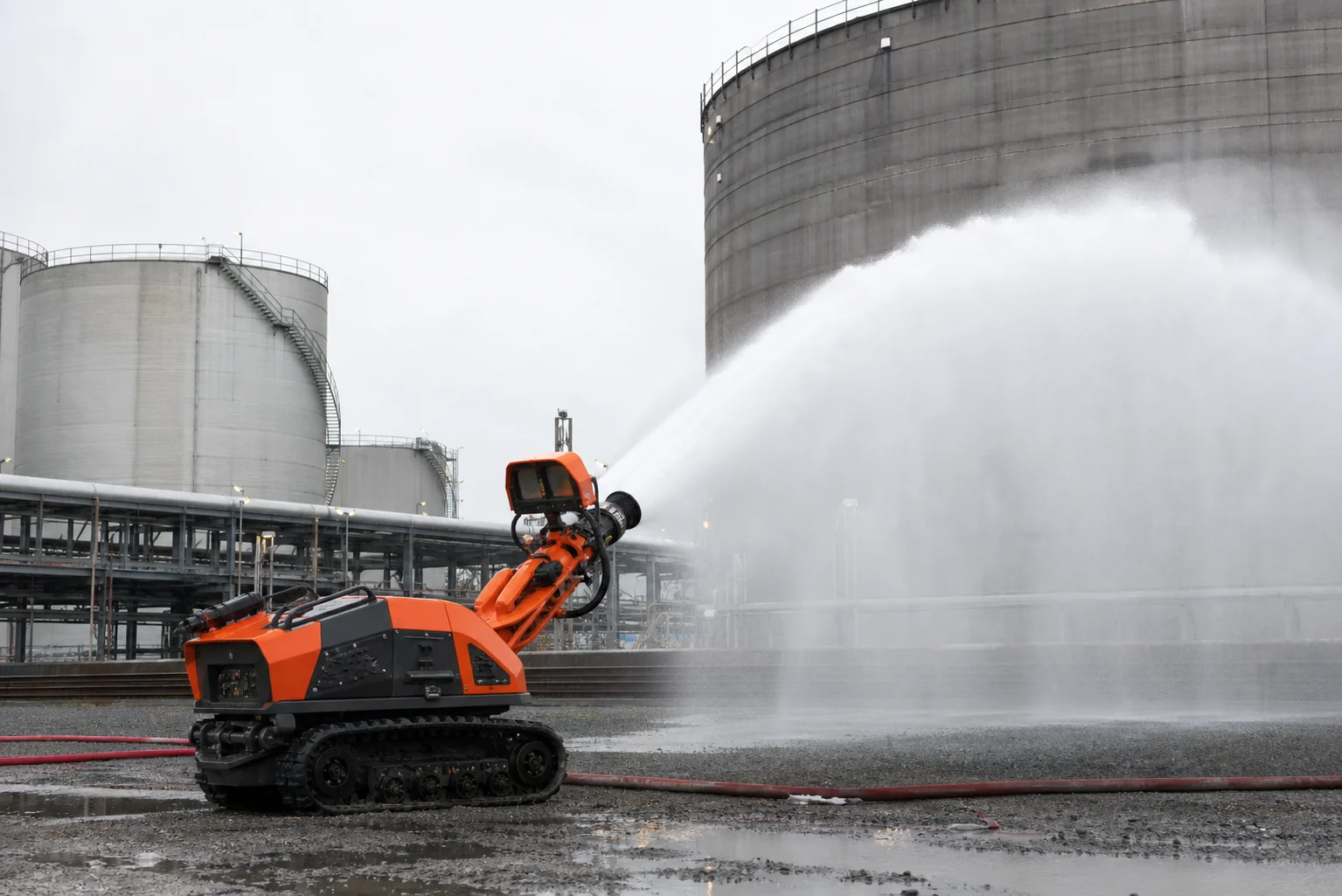
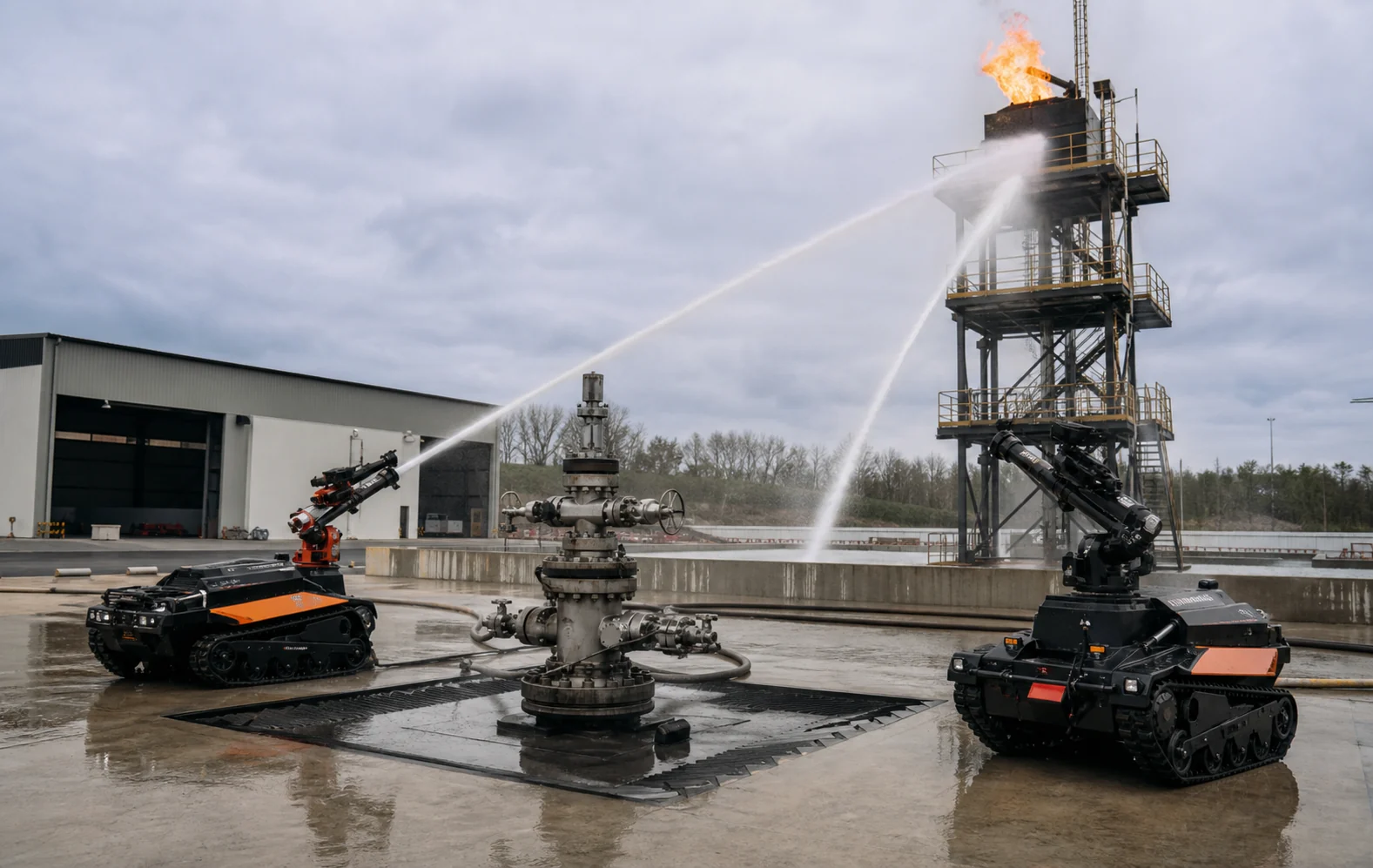
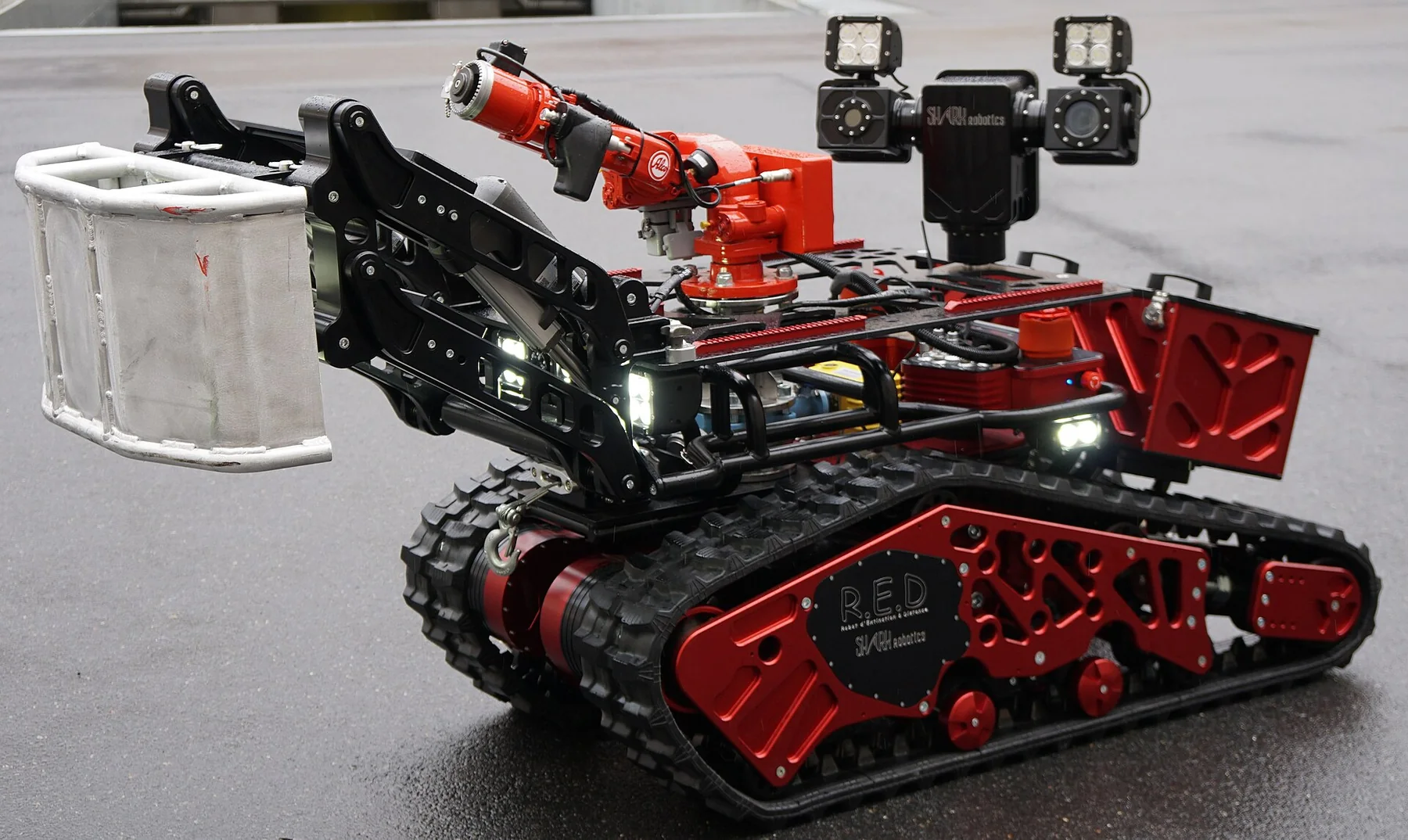
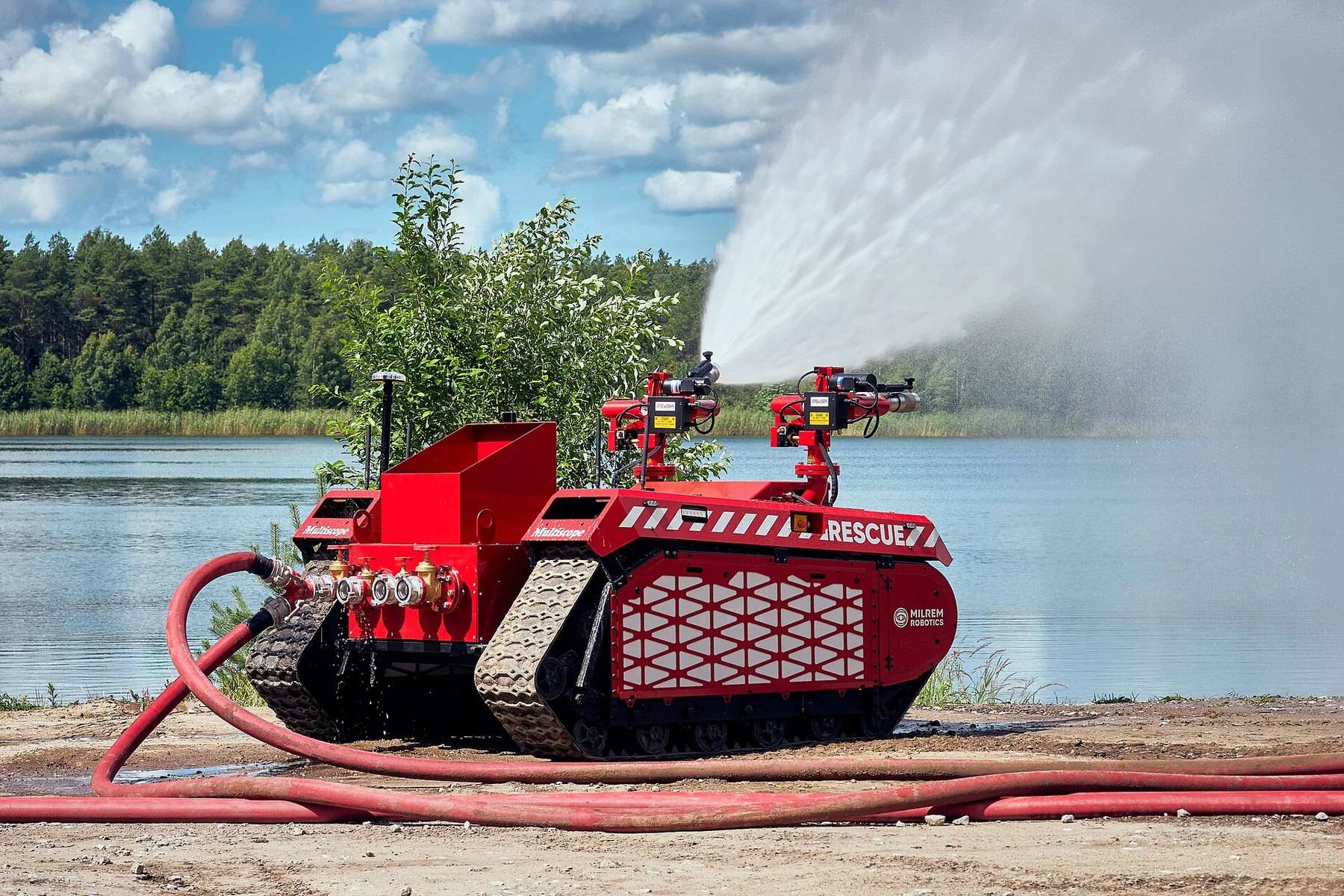
Tracked firefighting robots can deliver water or foam toward high-risk zones while operators remain outside immediate exposure.
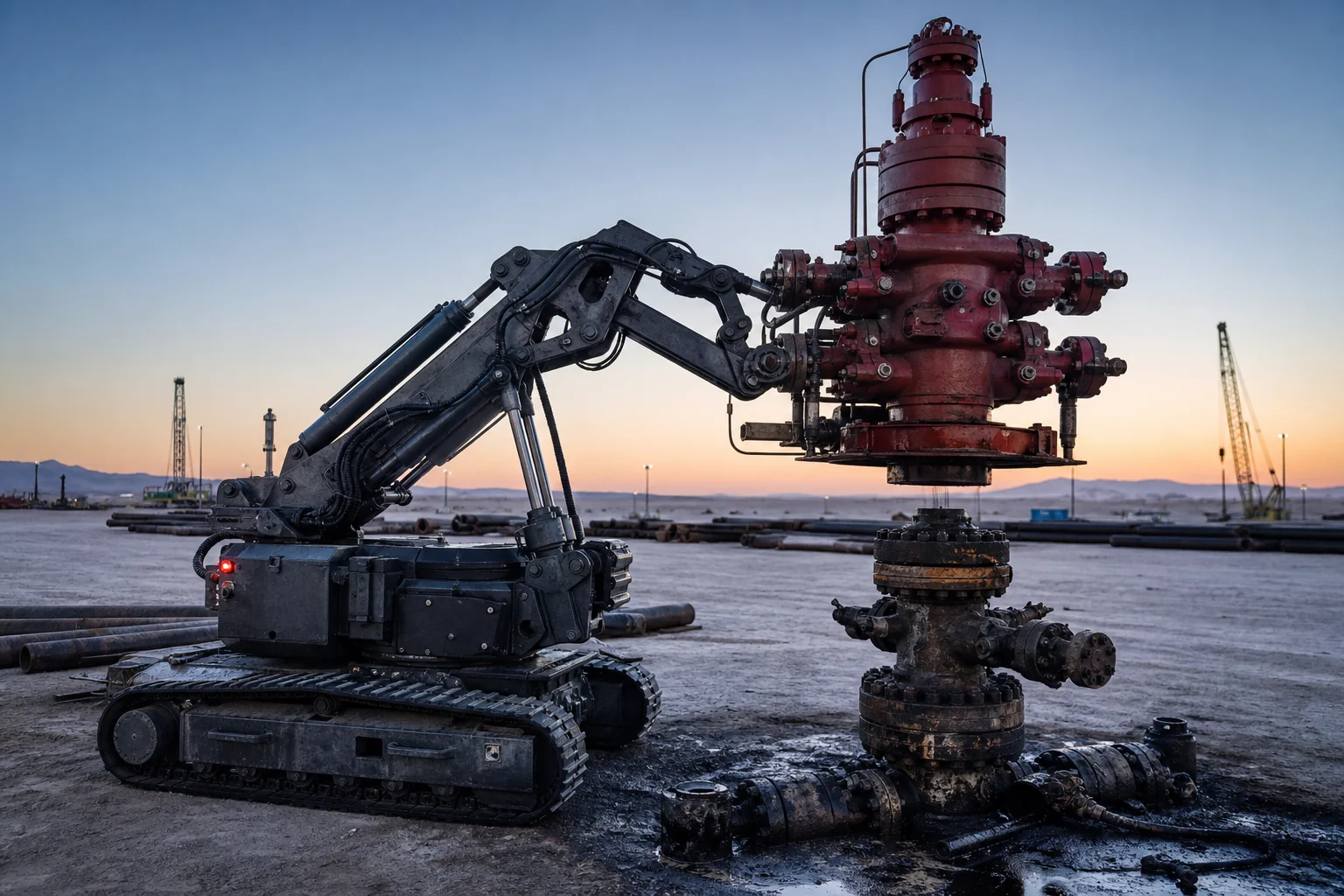
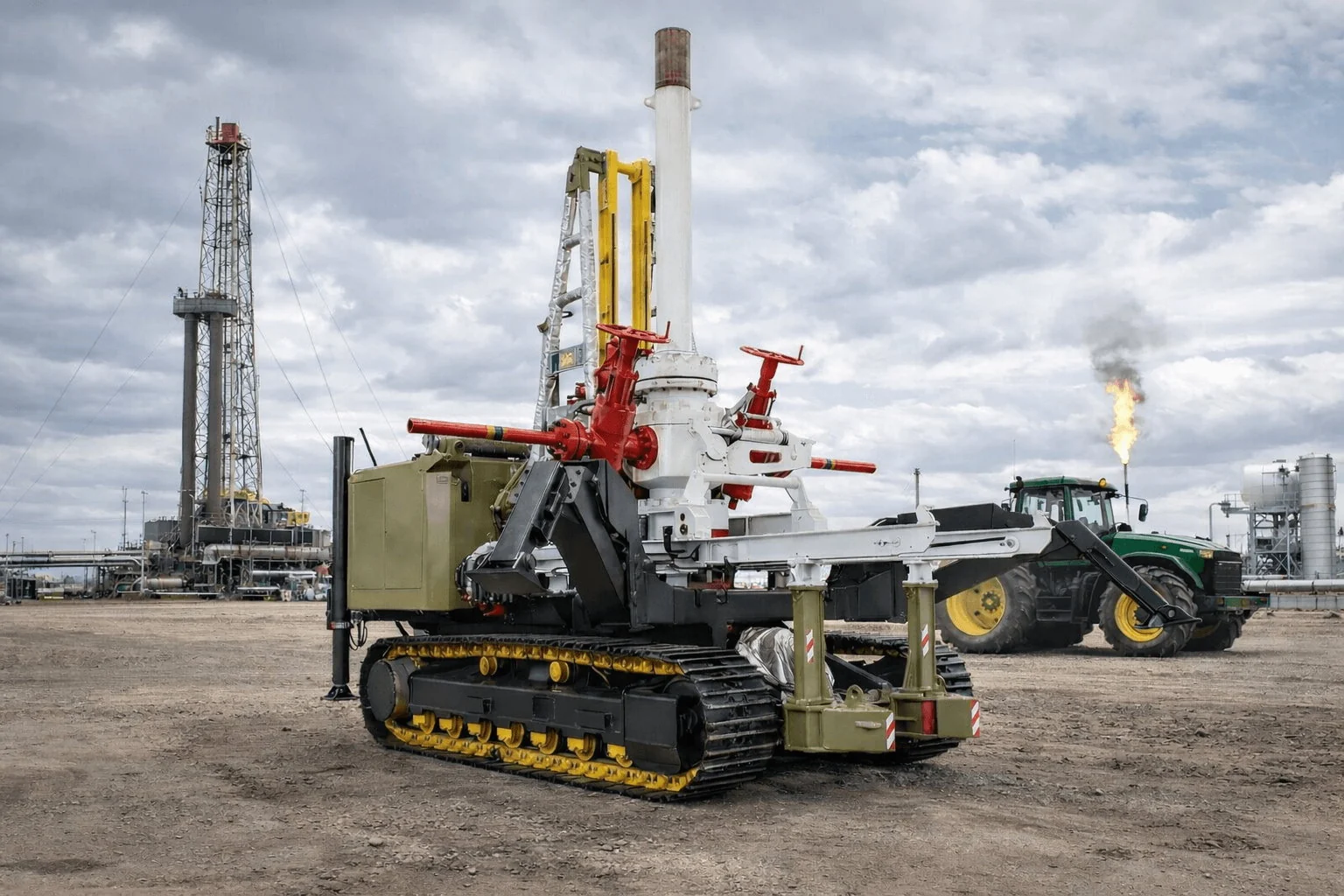
Remote support for damaged or flowing wellhead scenarios, including approach, positioning and visual feedback.
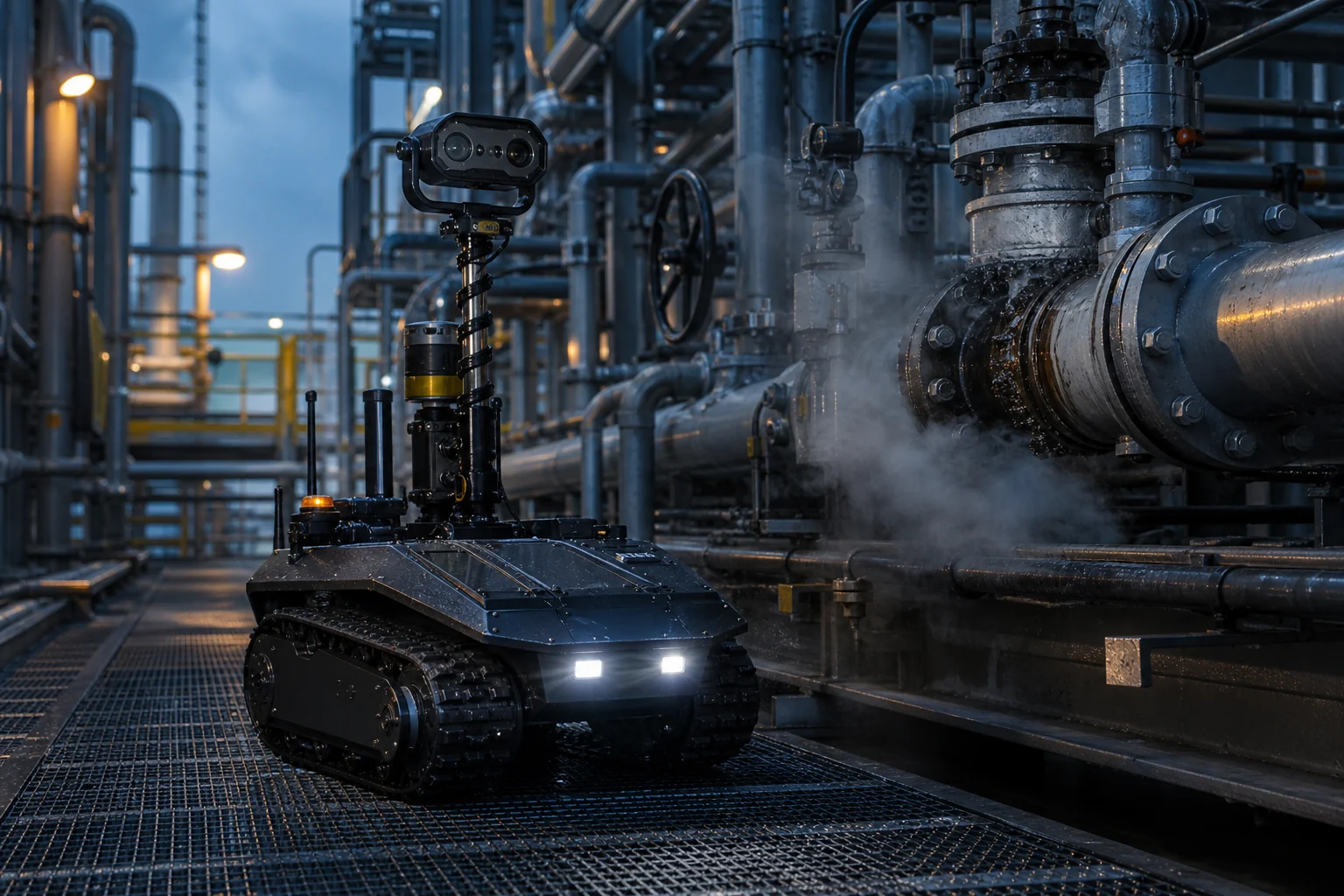
Collect live video, thermal data and gas readings from areas affected by smoke, heat or explosion risk.
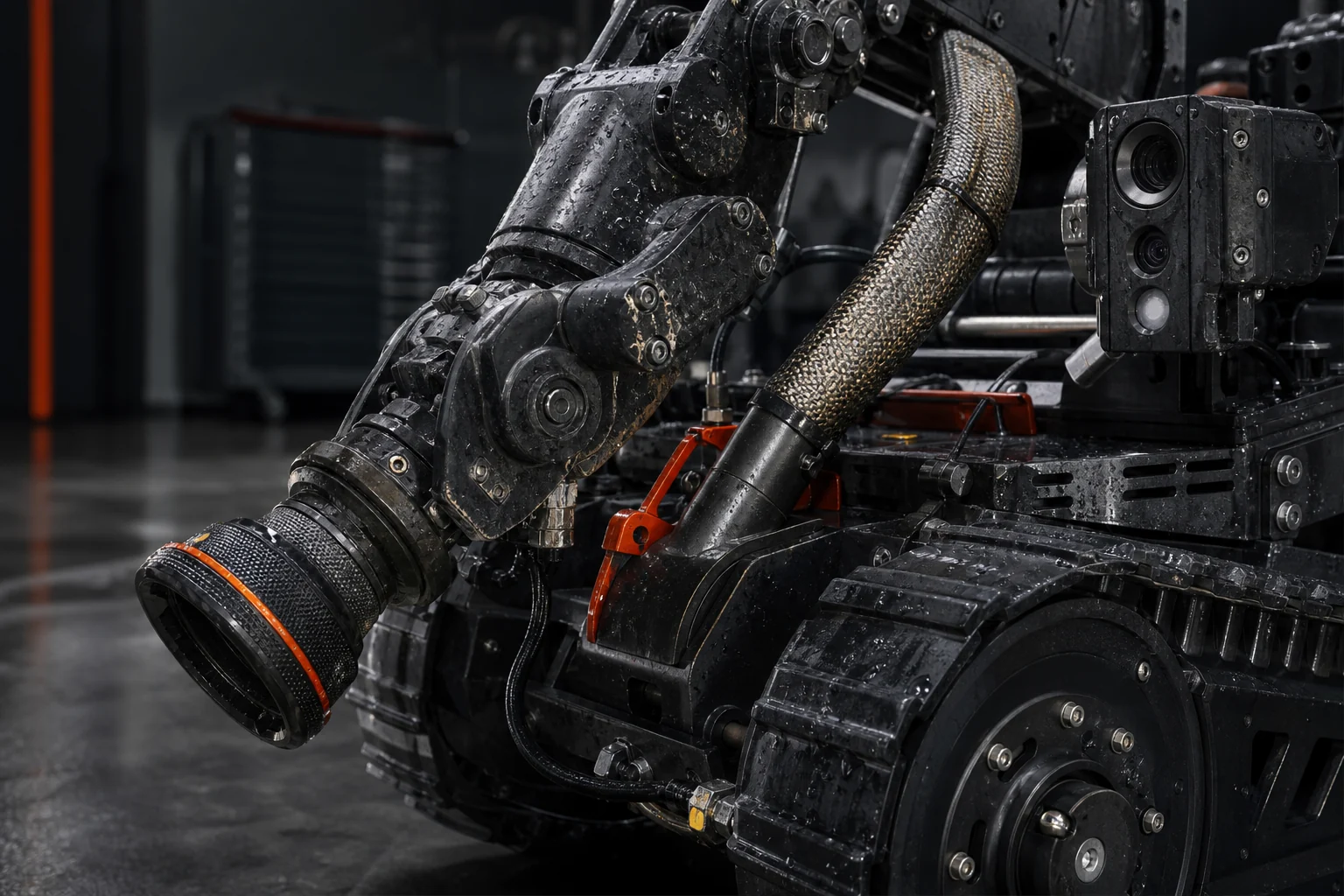
Heavy-duty robotic platforms can be configured with hydraulic attachments, manipulators or transport modules.
Equipment
Each system is selected around a defined scenario: fire suppression, wellhead intervention, inspection or heavy-duty remote work.
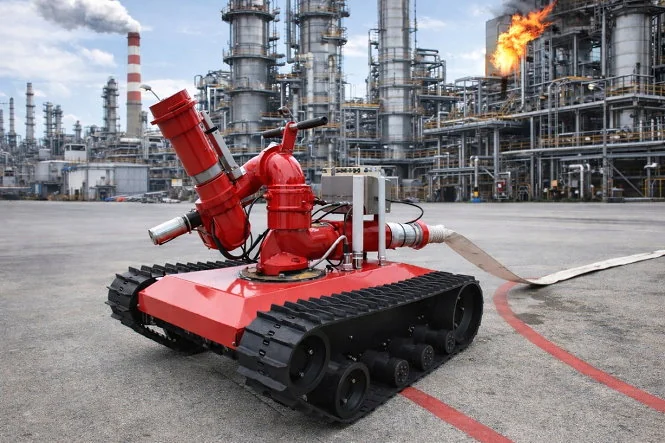
A remote-controlled tracked platform for water or foam delivery, cooling and fire suppression support on industrial sites.
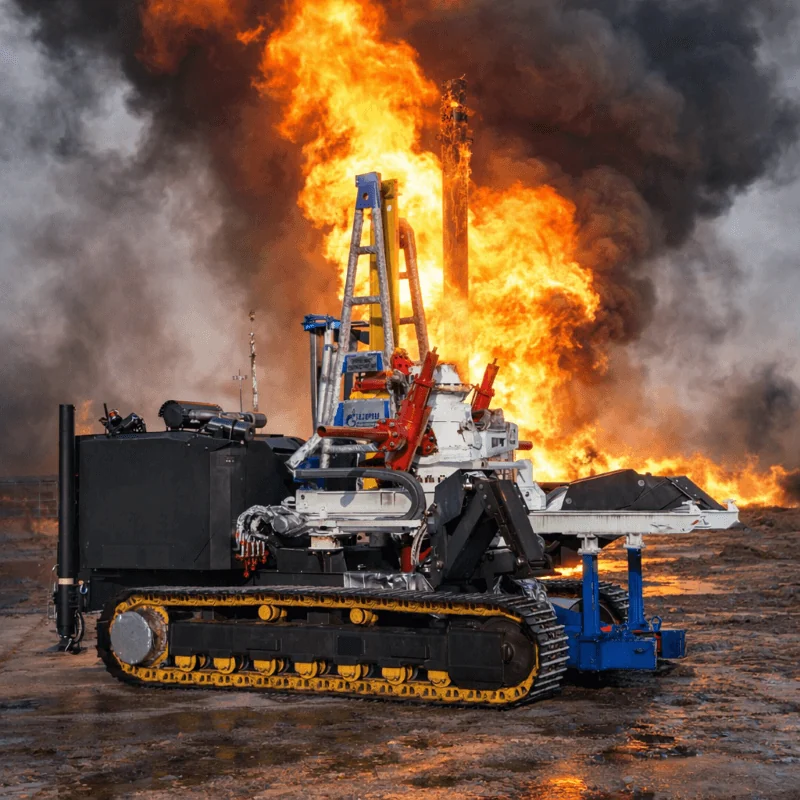
A heavy robotic platform for remote approach and positioning support during blowout-control operations.
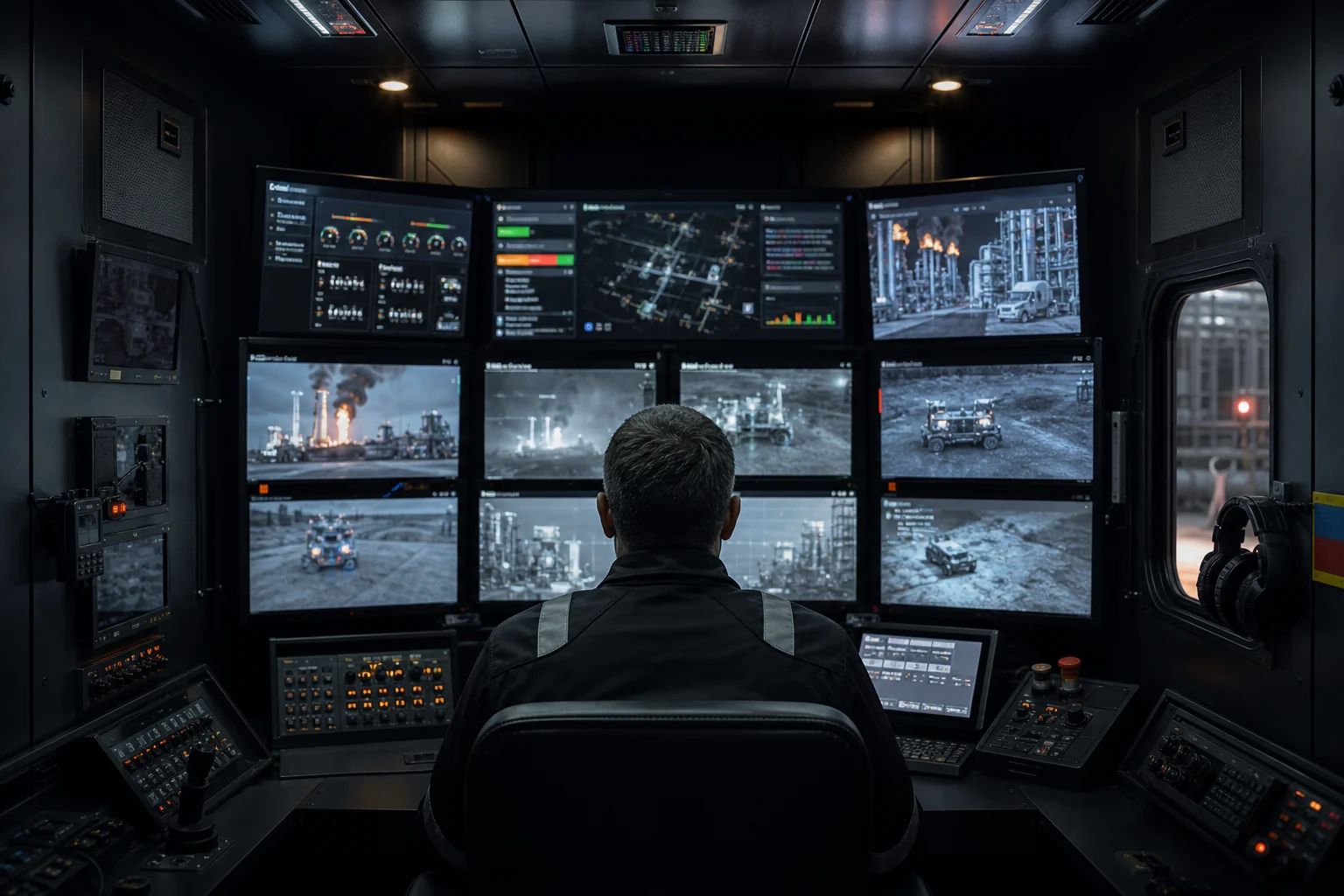
A compact robotic system for visual inspection, thermal assessment and gas monitoring before personnel enter.
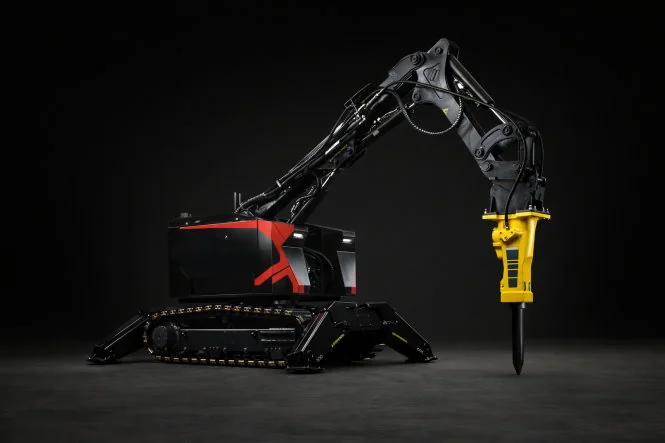
A multipurpose remote platform configurable with tools, attachments or transport modules for difficult industrial tasks.
Applications
Robotic systems are most valuable where personnel exposure, access limitations or incident speed create operational risk.
Blowout response, wellhead access, remote shut-off support and hot-zone inspection.
Fire suppression support, cooling operations, gas-risk inspection and reconnaissance.
Cooling, exposure protection, fire response and remote monitoring around storage infrastructure.
Operation in areas with toxic emissions, explosive atmosphere risk or restricted personnel access.
Fire response and inspection around flammable cargo, warehouses and fuel infrastructure.
Remote work in tunnels, converters, workshops, demolition areas and difficult-access zones.
Deployment
We review the facility, likely incident types, access constraints, fire loads, hazardous substances and response requirements.
The platform, attachments, cameras, communication range and operator controls are selected for the use case.
The equipment is delivered with basic checks, configuration review and documentation for the operating scenario.
Teams receive practical orientation on remote operation, safety zones and deployment sequence.
The system can be integrated into the site’s emergency-response plan, training schedule and inspection routines.
Field scenarios
Use practical visuals to align stakeholders around the incident type, required equipment and response sequence.
Learn more
When remote fire suppression support reduces exposure and improves incident visibility.
How robotic platforms support approach, positioning and situational awareness near damaged wellheads.
What to define before choosing video, thermal imaging, gas detection and telemetry options.
A practical procurement route from scenario review to operator readiness.
Contact
Tell us about your site, emergency-response challenges and equipment requirements. We will help define a suitable robotic system configuration.